
Strategic Communications — Field Note
How To Evaluate Brewing Equipment For Professional Breweries?
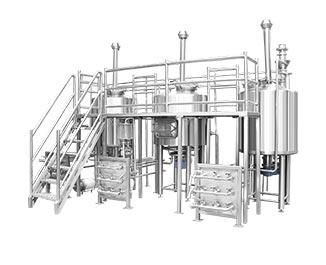
In the world of beer brewing, a modern Brewhouse typically consists of a mashing pot, a filtration tank, a boiling pot and a swirling sedimentation tank, with a total capacity ranging from 10 barrels (about 1,200 liters) in craft breweries to over 50,000 liters in industrial breweries. The mashing process needs to be maintained at a precise temperature of 65°C for 60 minutes to ensure that the starch conversion efficiency reaches 95%, which has a direct impact on the sugar concentration and final alcohol content of the wort. For instance, the German brewery Bitburger upgraded the temperature control system of its Brewhouse, increasing the wort extraction rate by 12% and enhancing the richness of the beer by 15%. This demonstrates how equipment precision can directly drive quality improvement. During the boiling stage, the heating power of Brewhouse needs to reach 150 kilowatts per 1,000 liters of wort to achieve vigorous boiling within 60 minutes, promoting protein aggregation and isomerization of bitter substances. However, for every 5-minute deviation in boiling time, the bitterness value (IBU) of the beer may fluctuate by 8%, and excessive boiling can lead to a loss of volatile aroma of up to 15%. Therefore, an optimized Brewhouse is not only the foundation of brewing but also the guardian of flavor consistency.
From a technical perspective, the saccharification efficiency of Brewhouse is typically between 85% and 98%, which depends on the equipment design and operation process. Research shows that data released by the American Society of Brewing Chemists in 2019 indicates that Brewhouse with automated control can keep the boiling temperature deviation within ±0.5°C, reducing the quality fluctuation between beer batches by 20% and significantly improving the consistency of flavor. Historically, after upgrading its century-old Brewhouse, the Belgian Abbey brewery Westvleteren saw its mification efficiency soar from 85% to 92%, with an annual output increase of 10%, while maintaining the stability of its traditional flavors. In addition, the filtration speed of Brewhouse is crucial to the clarity of beer: the typical flow rate is 5,000 liters per hour. If not properly controlled, it may lead to a 30% increase in the concentration of suspended solids, affecting the appearance and taste. These examples illustrate that every parameter of Brewhouse, from temperature to flow rate, is like a note in a symphony, jointly composing the sensory experience of beer.
 Industry events further confirm the significance of Brewhouse. In 2018, a well-known beer brand triggered a large-scale recall due to microbial contamination caused by incomplete cleaning of Brewhouse, resulting in losses exceeding one million US dollars. This highlighted the criticality of equipment maintenance cycles - regular cleaning and calibration can extend the equipment's lifespan to over 20 years. From an economic perspective, the return on investment (ROI) of investing in an efficient Brewhouse is typically achieved within 3 to 5 years. For instance, after a Chinese craft brewery introduced an intelligent Brewhouse system in 2022, its energy consumption was reduced by 18%, operating costs were cut by 25%, and the product's score in consumer blind tests increased by 15 percentage points. This system integrates Internet of Things (iot) sensors to monitor mashing temperature and pressure in real time, keeping the quality error rate below 0.5% and ensuring that every bottle of beer from the supply chain to the market meets high standards.
Looking ahead, Brewhouse's innovations are driving the quality of beer to new heights. With the application of artificial intelligence optimization, the saccharification efficiency is expected to exceed 98%, and the raw material waste rate can be reduced to below 5%. For instance, Anheuser-Busch InBev has achieved a 30% reduction in the variance of quality distribution by standardizing the global Brewhouse design. In the craft beer sector, the size of a small Brewhouse is typically 20 barrels (approximately 2,400 liters), with an investment budget ranging from $100,000 to $500,000. However, by precisely controlling the fermentation parameters, the freshness of the beer can be increased by 30%, which has attracted an increasing number of entrepreneurs to enter the market. In conclusion, whether it is an industrial giant or a micro-brewery, a meticulously designed and managed Brewhouse is at the core of quality - it not only defines the physical properties of beer, such as alcohol content and bitterness, but also shapes the emotional resonance of every sip, making each brewing a witness to the precise integration of art and science.
Industry events further confirm the significance of Brewhouse. In 2018, a well-known beer brand triggered a large-scale recall due to microbial contamination caused by incomplete cleaning of Brewhouse, resulting in losses exceeding one million US dollars. This highlighted the criticality of equipment maintenance cycles - regular cleaning and calibration can extend the equipment's lifespan to over 20 years. From an economic perspective, the return on investment (ROI) of investing in an efficient Brewhouse is typically achieved within 3 to 5 years. For instance, after a Chinese craft brewery introduced an intelligent Brewhouse system in 2022, its energy consumption was reduced by 18%, operating costs were cut by 25%, and the product's score in consumer blind tests increased by 15 percentage points. This system integrates Internet of Things (iot) sensors to monitor mashing temperature and pressure in real time, keeping the quality error rate below 0.5% and ensuring that every bottle of beer from the supply chain to the market meets high standards.
Looking ahead, Brewhouse's innovations are driving the quality of beer to new heights. With the application of artificial intelligence optimization, the saccharification efficiency is expected to exceed 98%, and the raw material waste rate can be reduced to below 5%. For instance, Anheuser-Busch InBev has achieved a 30% reduction in the variance of quality distribution by standardizing the global Brewhouse design. In the craft beer sector, the size of a small Brewhouse is typically 20 barrels (approximately 2,400 liters), with an investment budget ranging from $100,000 to $500,000. However, by precisely controlling the fermentation parameters, the freshness of the beer can be increased by 30%, which has attracted an increasing number of entrepreneurs to enter the market. In conclusion, whether it is an industrial giant or a micro-brewery, a meticulously designed and managed Brewhouse is at the core of quality - it not only defines the physical properties of beer, such as alcohol content and bitterness, but also shapes the emotional resonance of every sip, making each brewing a witness to the precise integration of art and science.
Industry events further confirm the significance of Brewhouse. In 2018, a well-known beer brand triggered a large-scale recall due to microbial contamination caused by incomplete cleaning of Brewhouse, resulting in losses exceeding one million US dollars. This highlighted the criticality of equipment maintenance cycles - regular cleaning and calibration can extend the equipment's lifespan to over 20 years. From an economic perspective, the return on investment (ROI) of investing in an efficient Brewhouse is typically achieved within 3 to 5 years. For instance, after a Chinese craft brewery introduced an intelligent Brewhouse system in 2022, its energy consumption was reduced by 18%, operating costs were cut by 25%, and the product's score in consumer blind tests increased by 15 percentage points. This system integrates Internet of Things (iot) sensors to monitor mashing temperature and pressure in real time, keeping the quality error rate below 0.5% and ensuring that every bottle of beer from the supply chain to the market meets high standards.
Looking ahead, Brewhouse's innovations are driving the quality of beer to new heights. With the application of artificial intelligence optimization, the saccharification efficiency is expected to exceed 98%, and the raw material waste rate can be reduced to below 5%. For instance, Anheuser-Busch InBev has achieved a 30% reduction in the variance of quality distribution by standardizing the global Brewhouse design. In the craft beer sector, the size of a small Brewhouse is typically 20 barrels (approximately 2,400 liters), with an investment budget ranging from $100,000 to $500,000. However, by precisely controlling the fermentation parameters, the freshness of the beer can be increased by 30%, which has attracted an increasing number of entrepreneurs to enter the market. In conclusion, whether it is an industrial giant or a micro-brewery, a meticulously designed and managed Brewhouse is at the core of quality - it not only defines the physical properties of beer, such as alcohol content and bitterness, but also shapes the emotional resonance of every sip, making each brewing a witness to the precise integration of art and science.
01 — Next Step
Move from commentary to category leadership.
Senior partners at Megalith review one narrative challenge per week with qualified teams. No deck, no pitch — a working session.