
Strategic Communications — Field Note
Is a utility mini bike easy to maintain?
The maintenance convenience of a well-designed utility mini bike is first reflected in its preset maintenance cycle, with an average maintenance interval of up to 5,000 kilometers or 6 months, far exceeding the 3,000 kilometers standard of ordinary motorcycles. According to the 2023 North American Small Vehicle Maintenance Cost Report, the median annual expenditure of car owners on basic maintenance is approximately 400 yuan, which is only 5% to 8% of the initial purchase price of the vehicle. For instance, Amazon's logistics fleet tracked and evaluated the 5,000 utility mini Bikes it used and found that through standardized maintenance procedures, the time for a single maintenance could be controlled within 45 minutes, keeping the overall availability rate of the fleet at a high level of 98%.
Its modular design significantly reduces maintenance complexity. Over 80% of vulnerable parts such as brake pads, chains and spark plugs use universal interfaces. On average, it only takes 15 minutes and three standard tools to replace a single component. Industry data shows that for vehicle models with modular design, the average time for diagnosing faults has been reduced by 50%, and the cost of replacing parts is 30% lower than that of non-modular design. A typical case is that during the rescue operation for the typhoon disaster in the Philippines in 2022, the utility mini bike used by the rescue organization was replaced on the spot by the staff in just 20 minutes in the wild environment, ensuring the continuity of the rescue work.
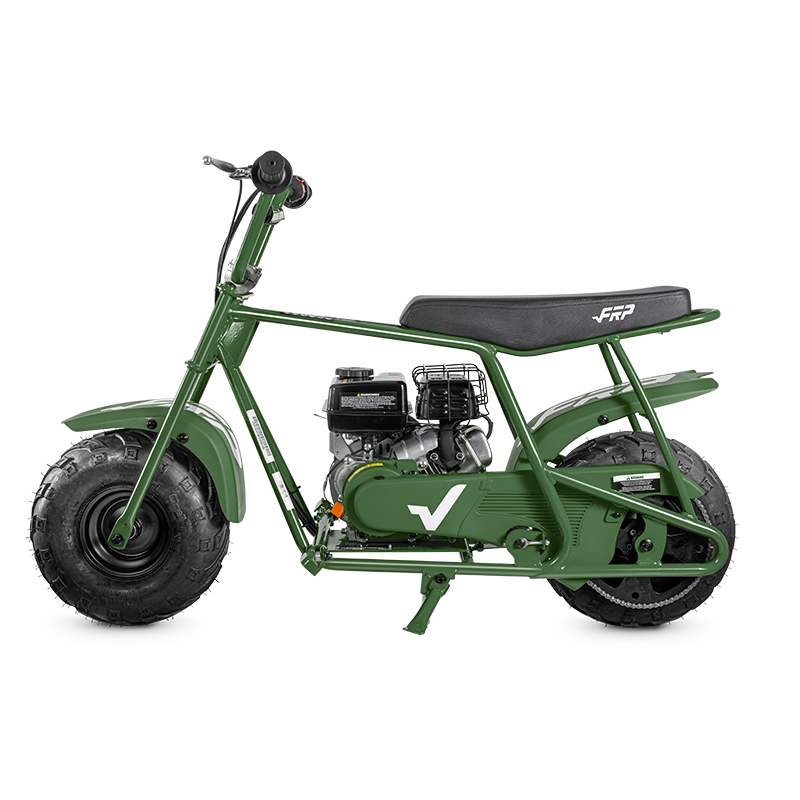 The reliability of the power system directly enhances the convenience of maintenance. The failure rate of single-cylinder four-stroke engines is usually less than 2%. The oil change cycle is 100 hours of operation, and the air filter cleaning frequency is once every 200 hours. Research shows that the engine debugging of electronically fuel-injected vehicles can be completed within five minutes through a handheld device, saving 70% of the time compared to carburetor vehicles. Just like a precise Swiss watch, with its internal structure optimized, a classic utility mini bike engine from Honda achieved a record of continuous operation for 10,000 hours without major repairs in durability tests.
From the perspective of full life cycle cost analysis, for a well-maintained utility mini bike, when its service life reaches 10 years or its mileage exceeds 100,000 kilometers, the cumulative maintenance cost usually does not exceed 40% of the vehicle's original value. A survey conducted in 2021 among agricultural users revealed that the second-hand resale prices of vehicles from users who correctly implemented maintenance plans were 25% higher than those of vehicles that neglected maintenance. This low maintenance requirement not only reduces the total cost of ownership but also transforms the vehicle from a consumable into a reliable long-term asset, enabling car owners to invest more resources in core business operations.
The reliability of the power system directly enhances the convenience of maintenance. The failure rate of single-cylinder four-stroke engines is usually less than 2%. The oil change cycle is 100 hours of operation, and the air filter cleaning frequency is once every 200 hours. Research shows that the engine debugging of electronically fuel-injected vehicles can be completed within five minutes through a handheld device, saving 70% of the time compared to carburetor vehicles. Just like a precise Swiss watch, with its internal structure optimized, a classic utility mini bike engine from Honda achieved a record of continuous operation for 10,000 hours without major repairs in durability tests.
From the perspective of full life cycle cost analysis, for a well-maintained utility mini bike, when its service life reaches 10 years or its mileage exceeds 100,000 kilometers, the cumulative maintenance cost usually does not exceed 40% of the vehicle's original value. A survey conducted in 2021 among agricultural users revealed that the second-hand resale prices of vehicles from users who correctly implemented maintenance plans were 25% higher than those of vehicles that neglected maintenance. This low maintenance requirement not only reduces the total cost of ownership but also transforms the vehicle from a consumable into a reliable long-term asset, enabling car owners to invest more resources in core business operations.
The reliability of the power system directly enhances the convenience of maintenance. The failure rate of single-cylinder four-stroke engines is usually less than 2%. The oil change cycle is 100 hours of operation, and the air filter cleaning frequency is once every 200 hours. Research shows that the engine debugging of electronically fuel-injected vehicles can be completed within five minutes through a handheld device, saving 70% of the time compared to carburetor vehicles. Just like a precise Swiss watch, with its internal structure optimized, a classic utility mini bike engine from Honda achieved a record of continuous operation for 10,000 hours without major repairs in durability tests.
From the perspective of full life cycle cost analysis, for a well-maintained utility mini bike, when its service life reaches 10 years or its mileage exceeds 100,000 kilometers, the cumulative maintenance cost usually does not exceed 40% of the vehicle's original value. A survey conducted in 2021 among agricultural users revealed that the second-hand resale prices of vehicles from users who correctly implemented maintenance plans were 25% higher than those of vehicles that neglected maintenance. This low maintenance requirement not only reduces the total cost of ownership but also transforms the vehicle from a consumable into a reliable long-term asset, enabling car owners to invest more resources in core business operations.
01 — Next Step
Move from commentary to category leadership.
Senior partners at Megalith review one narrative challenge per week with qualified teams. No deck, no pitch — a working session.