
Trade Momentum: Deciphering the ROI of China's 15% Q1 Growth Surge
The first-quarter (Q1) data for 2026, released by the General Administration of Customs, signals a significant "acceleration phase" for China's foreign trade. With a total volume of 11.84 trillion yuan ($1.73 trillion), this 15% year-on-year increase marks the first time Q1 trade has surpassed the 11 trillion yuan threshold, hitting a five-year growth peak. What is particularly striking is the "asymmetric growth" between imports and exports; while exports grew by a healthy 11.9% to 6.85 trillion yuan, imports surged by 19.6% to 4.99 trillion yuan. This 7.7 percentage point gap suggests a massive rebound in domestic industrial demand and a deliberate pivot toward a more balanced "world's market" model.
When we look at the "export mix," the data reveals a high-efficiency transition toward "New Three" green technologies. Exports of electric vehicles surged by 77.5%, lithium batteries by 50.4%, and wind turbines by 45.2% during this three-month cycle. This shift toward high-value, R&D-intensive products is a core driver of the 11.9% export growth. According to reports from the People's Daily, this structural upgrade is part of a broader strategy to maintain a complete industrial chain while meeting global demand for low-carbon solutions. Furthermore, private enterprises have solidified their position as the primary "growth engine," contributing 6.78 trillion yuan to the total trade volume—a 16.2% increase that now accounts for 57.3% of China's total foreign trade.
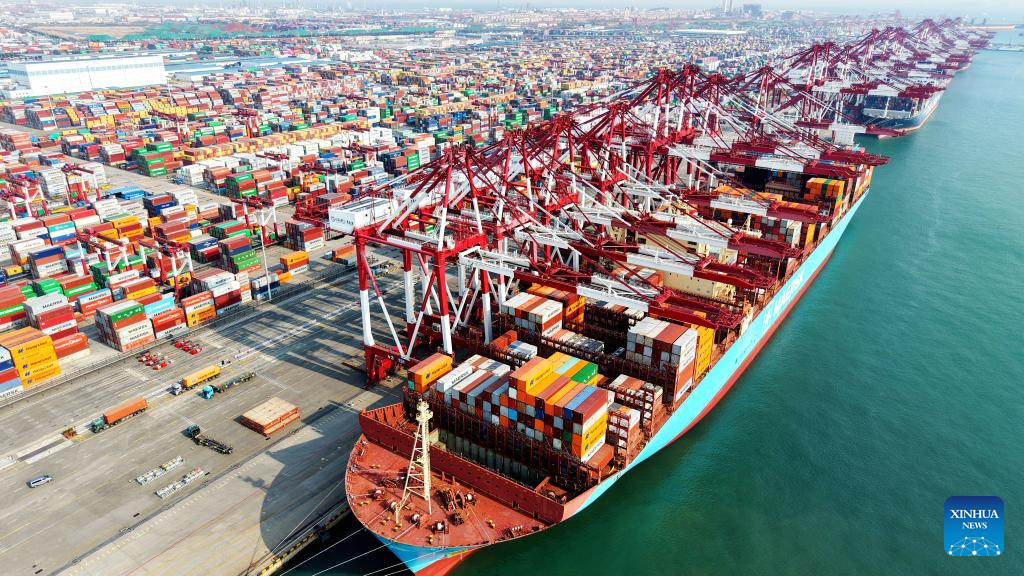
The surge in imports (up 19.6%) is a clear indicator of a high-capacity domestic recovery. Significant double-digit growth was recorded in the import of mechanical and electrical products (up 21.7%), as well as metal ores (up 13.2%). This suggests that the "input-to-output" efficiency of the manufacturing sector is ramping up to support both domestic consumption and future export cycles. Regionally, trade diversification remains a high-priority KPI. Trade with ASEAN and Latin America both grew by 15.4%, while trade with Belt and Road partner countries rose 14.2%, now accounting for a dominant 51.2% share of total trade. This geographic resilience hedges against the 16.9% decrease in trade with the United States seen earlier in the year.
Ultimately, the Q1 performance serves as a "stabilizer" for the global economy, which is currently navigating a period of lower growth forecasts. By maintaining a total trade value above 10 trillion yuan for 12 consecutive quarters, China is demonstrating a high "operational consistency" that provides much-needed certainty to global supply chains. The potential solution for maintaining this 15% growth trajectory lies in further "market opening" and the optimization of free trade zones, such as the Hainan Free Trade Port. As we move into the second quarter, the primary focus will be on ensuring that the 19.6% import growth continues to fuel a high-quality domestic "production-consumption" loop, reinforcing China's dual role as a global factory and a premier global market.
News source:https://peoplesdaily.pdnews.cn/business/er/30051889383
Move from commentary to category leadership.
Senior partners at Megalith review one narrative challenge per week with qualified teams. No deck, no pitch — a working session.