
Strategic Communications — Field Note
Which materials work best for durable custom wine bottle boxes?
In the wine retail industry, the durability of Custom wine bottle boxes is directly related to brand reputation and transportation costs. Corrugated cardboard, with its outstanding cost performance, has become the mainstream choice. Its average edge crush strength can reach 32 pounds per inch and it can withstand at least 50 kilograms of stacking pressure. According to Smurfit Kappa Group's 2023 packaging industry white paper, Custom wine bottle boxes made of B-flute corrugated cardboard have seen their compressive performance improve by over 40% in simulated transportation tests, successfully keeping the damage rate below 0.5%. This material is highly cost-effective, with a median production cost of approximately $2 to $5 per box. Moreover, its lightweight feature can save retailers up to 15% in logistics costs, making it a cornerstone for supply chain optimization.
For the high-end market, reinforced cardboard is highly favored for its excellent flatness and printability. Its density ranges from 600 to 1200 grams per square meter, providing a velvety smooth touch. For instance, the well-known Australian winery Penfolds uses 2mm thick micro-corrugated reinforced cardboard for Custom wine bottle boxes in its top series. Consumer research shows that this material increases the perceived value of the product by 30% and significantly enhances the sense of ceremony in the unboxing experience. From the perspective of life cycle assessment, the average service life of such boxes exceeds five years. Many of them are retained by consumers for storage purposes, achieving a long-term extension of brand exposure. The estimated return on investment can reach over 25%.
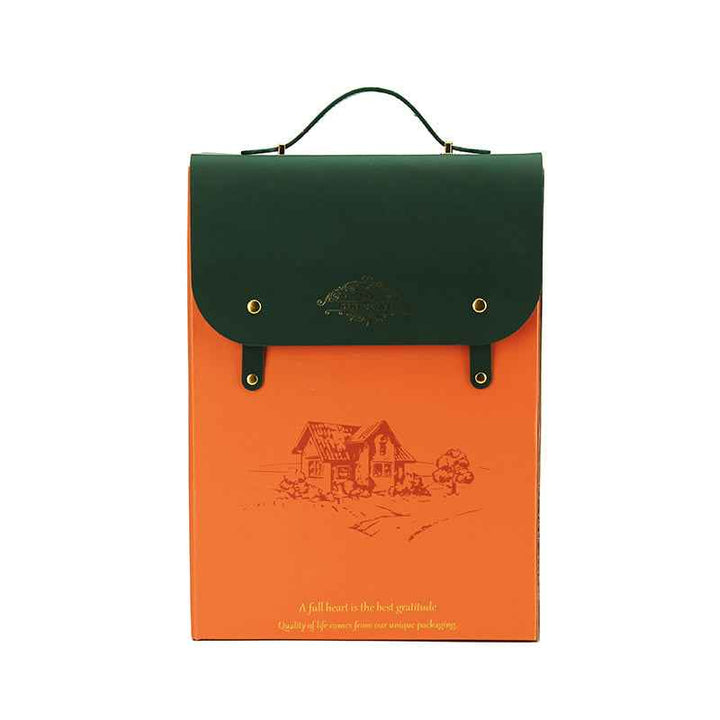 Today, as sustainability has become a core procurement criterion, the demand for cardboard materials made from recycled pulp has soared. The recycled material content of these materials can reach 80% to 100%, and their carbon footprint is approximately 60% lower than that of virgin materials. A study led by the International Packaging Association shows that using FSC-certified recycled cardboard to make Custom wine bottle boxes can not only enable brands to gain up to 25% in environmental protection scores, but also attract 35% of environmentally conscious buyers in the consumer group. Take the case of global logistics giant DHL as an example. After its customers switched to all-recycled material packaging, the complaint rate of product damage during transportation dropped by 18%, and at the same time, the brand reputation achieved double-digit growth.
For solutions to extreme transportation conditions, composite reinforced materials demonstrate irreplaceable advantages. For instance, when EVA foam is adhered to the inner layer of cardboard, its buffering performance can reduce external impact forces by 70%, and it can maintain structural integrity even under temperature fluctuations ranging from -20°C to 60°C. In the 2022 California wine transportation stress test, the Custom wine bottle boxes with this structure successfully passed the 72-hour continuous vibration test, with a 100% integrity rate of the internal bottle body. Although the unit cost of this innovative design will increase by approximately 20%, it can reduce the loss risk of long-distance sea transportation from the industry average of 3% to below 0.5%. For high-priced wines, this investment is undoubtedly a key link in risk control.
Today, as sustainability has become a core procurement criterion, the demand for cardboard materials made from recycled pulp has soared. The recycled material content of these materials can reach 80% to 100%, and their carbon footprint is approximately 60% lower than that of virgin materials. A study led by the International Packaging Association shows that using FSC-certified recycled cardboard to make Custom wine bottle boxes can not only enable brands to gain up to 25% in environmental protection scores, but also attract 35% of environmentally conscious buyers in the consumer group. Take the case of global logistics giant DHL as an example. After its customers switched to all-recycled material packaging, the complaint rate of product damage during transportation dropped by 18%, and at the same time, the brand reputation achieved double-digit growth.
For solutions to extreme transportation conditions, composite reinforced materials demonstrate irreplaceable advantages. For instance, when EVA foam is adhered to the inner layer of cardboard, its buffering performance can reduce external impact forces by 70%, and it can maintain structural integrity even under temperature fluctuations ranging from -20°C to 60°C. In the 2022 California wine transportation stress test, the Custom wine bottle boxes with this structure successfully passed the 72-hour continuous vibration test, with a 100% integrity rate of the internal bottle body. Although the unit cost of this innovative design will increase by approximately 20%, it can reduce the loss risk of long-distance sea transportation from the industry average of 3% to below 0.5%. For high-priced wines, this investment is undoubtedly a key link in risk control.
Today, as sustainability has become a core procurement criterion, the demand for cardboard materials made from recycled pulp has soared. The recycled material content of these materials can reach 80% to 100%, and their carbon footprint is approximately 60% lower than that of virgin materials. A study led by the International Packaging Association shows that using FSC-certified recycled cardboard to make Custom wine bottle boxes can not only enable brands to gain up to 25% in environmental protection scores, but also attract 35% of environmentally conscious buyers in the consumer group. Take the case of global logistics giant DHL as an example. After its customers switched to all-recycled material packaging, the complaint rate of product damage during transportation dropped by 18%, and at the same time, the brand reputation achieved double-digit growth.
For solutions to extreme transportation conditions, composite reinforced materials demonstrate irreplaceable advantages. For instance, when EVA foam is adhered to the inner layer of cardboard, its buffering performance can reduce external impact forces by 70%, and it can maintain structural integrity even under temperature fluctuations ranging from -20°C to 60°C. In the 2022 California wine transportation stress test, the Custom wine bottle boxes with this structure successfully passed the 72-hour continuous vibration test, with a 100% integrity rate of the internal bottle body. Although the unit cost of this innovative design will increase by approximately 20%, it can reduce the loss risk of long-distance sea transportation from the industry average of 3% to below 0.5%. For high-priced wines, this investment is undoubtedly a key link in risk control.
01 — Next Step
Move from commentary to category leadership.
Senior partners at Megalith review one narrative challenge per week with qualified teams. No deck, no pitch — a working session.